Keynote Speakers
United States
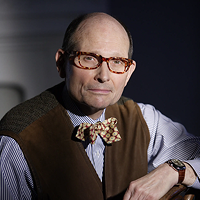
Dr. Michael Apuzzo
Yale University – online
Read More
Dr. Michael L. J. Apuzzo (Yale School of Medicine) is widely recognised as one of the foundational figures in modern neurosurgery, whose career has spanned pioneering work in microsurgery, stereotactic navigation, endoscopy, molecular-neurosurgery and the integration of advanced technologies into operative practice.
His contributions include:
- Establishing one of the world’s first central nervous system immunology and cellular-biology laboratories, thereby introducing the concept of “cellular and molecular neurosurgery” — the fusion of molecular science and surgical technique.
- Pioneering minimally invasive surgical corridors, intraoperative computer navigation and prototype stereotactic systems which brought intracranial surgery to new levels of precision and safety.
- Developing advanced methods for functional restoration of the brain and spinal cord, including early human grafting procedures for movement disorders, and championing neuromodulation for epilepsy, pain and psychiatric conditions.
- Serving as Editor-in-Chief of the influential journal Neurosurgery for nearly two decades, and founding both Operative Neurosurgery and World Neurosurgery — thereby shaping neurosurgical publishing in the digital era.
- Advocating for the globalisation of neurosurgical education and practice, and helping to embed engineering, simulation, nanotechnology and virtual-reality platforms into surgical training environments.
He also wrote the foreword of the Computational Neurosurgery textbook
United States
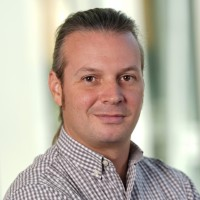
Dr. Spyridon Bakas
Indiana University
Read More
Dr. Spyridon Bakas is an internationally recognized leader in AI-driven neuro-oncology, federated machine learning (FML), & computational pathology, with Elsevier ranking him among the world’s top 0.5% most-cited scientists across disciplines. He is an Endowed Chair Associate Professor & the Computational Pathology Division Director in the Dept. of Pathology & Laboratory Medicine, with secondary appointments in Neurosurgery; Radiology; Biostatistics & Health Data Science; & Computer Science, at Indiana University in Indianapolis (IN, USA). Outside IU, he is in the MICCAI Society Board of Directors, the President of the MICCAI special interest group on Computational Pathology, & the Chair of the AI-RANO cooperative group.
Dr Bakas leads a federally funded research group focused on bridging biomedical imaging & AI to improve the diagnosis, prognosis, & treatment planning of brain tumors. His pioneering work extends to the creation of multi-institutional multi-modal datasets & FML frameworks that protect patient privacy while enabling global collaboration. His group introduced FML in healthcare in 2018 & drives the largest to-date glioblastoma studies (facilitated by FML) including data of >10,000 patients from >70 sites across 6 continents. He has been forming international consortia since 2017, & leading several major international benchmarking initiatives, incl. the RANO-MICCAI BraTS & FeTS challenges that have become gold standards for evaluating AI models for brain tumors. He has co-authored >150 peer-reviewed manuscripts & >100 abstracts, with collaborators across academic ranks & disciplines, as well as with industry. His publications have shaped current best practices in computational neuro-oncology, influencing both clinical workflows & translational AI research.
Australia
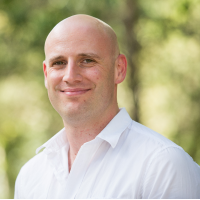
Prof. Alex Fornito
Monash University
Read More
Alex Fornito completed his PhD in the Departments of Psychology and Psychiatry at The University of Melbourne before undertaking Post-Doctoral training in the Department of Psychiatry at the University of Cambridge, UK, under the auspices of an NHMRC Training Fellowship. He is currently a Laureate Fellow of the Australian Research Council, Professor in the School of Psychological Sciences, and Head of the Brain Mapping and Modelling Research Program and Neural Systems and Behaviour Lab at the School of Psychological Sciences, Monash University.
Alex’s research develops new approaches to mapping and modelling the human brain in health and disease, with a focus on understanding foundational principles of brain organization and their genetic basis, characterizing brain disturbances in psychiatric disorders, and understanding how individual variability in brain structure and function relate to behaviour. He has been named as a Clarivate Analytics Highly Cited Researcher since 2017 and has received multiple awards, including from the Organization for Human Brain Mapping, the Society of Biological Psychiatry, the Australian Academy of Science, and the British Medical Association. He is incoming Editor-in-Chief of Network Neuroscience, Deputy Editor of Biological Psychiatry, Associate Editor of Science Advances, and a Board Reviewing Editor of eLife.
Australia
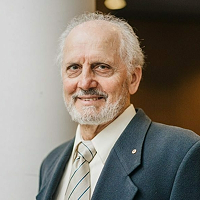
Scientia Professor George Paxinos AO DSc FASSA FAA (Dist)FRSN FAHMS
Neuroscience Research Australia
Read More
Scientia Professor George Paxinos studied psychology at UC Berkeley, McGill and Yale and is now an NHMRC Research Leadership Fellow at Neuroscience Research Australia and Scientia Professor at UNSW.
He identified 94 hitherto unknown regions in the brain of rats and humans and published 61 books on the brain and spinal cord of humans and experimental animals. His first book, The Rat Brain in Stereotaxic Coordinates, is the most cited work in neuroscience. His Atlas of the Human Brain received the American Association of Publishers Award for Excellence in Publishing in Medical Science and the British Medical Association Illustrated Book Award. He was president of the Australian Neuroscience Society and of the IBRO World Congress of Neuroscience. In a link with his science, in his novel A River Divided he used fiction to present to the public some of the facts of neuroscience and ecology, mixing scientific evidence into a plot with religion, tragedy and many forms of love within a core environmental theme: The protection of the Amazon rainforest.
Australia
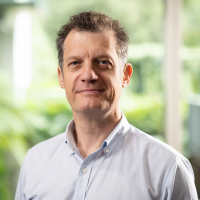
Prof. Olivier Salvado
Queensland University of Technology
Read More
Professor Olivier Salvado is a leading figure in the intersection of AI, medical imaging and computational vision. With more than 200 peer-reviewed publications and over 15,000 citations, he has helped shape how advanced imaging, deep learning and AI methods are applied to biomedical and mission-critical domains. His research spans from developing high-fidelity image-analysis pipelines for MRI and CT, to large-scale AI systems that support national “missions” (such as environmental monitoring or health diagnostics). Professor Salvado’s work is distinguished by its blend of cutting-edge algorithm development (e.g., self-supervised & geometric deep learning) and rigorous translational focus — applying AI frameworks in real-world settings with ethical, explainable and scalable design.
Australia
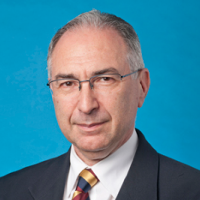
Prof. Jeffrey Rosenfeld
Monash University
Read More
Professor Jeffrey V. Rosenfeld AC OBE is a world-leading neurosurgeon whose expertise spans neurotrauma, brain-computer interfaces and medical bionics. He leads interdisciplinary efforts to restore function after severe brain and spinal injury—most notably as a clinical pioneer in the development of a wireless implantable visual prosthesis (“bionic vision”) and as a co-investigator in landmark trials of decompressive craniectomy for traumatic brain injury.
At the intersection of surgery, engineering and translational innovation, his work exemplifies how advanced neurotechnology can reshape treatment of brain injury and sensory loss.
United States
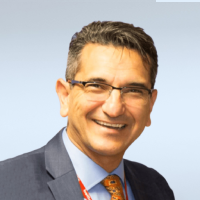
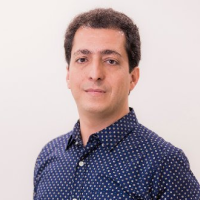
Dr. Babak Kateb
Society for Brain Mapping and Therapeutics
Read More
Dr Babak Kateb is a pioneering neuroscientist and neuro-tech innovator whose expertise lies at the intersection of brain mapping, advanced diagnostics and therapeutic technology. He leads efforts in nanotechnology, AI-driven imaging, cellular therapies and device-integration to address neurological disorders such as brain cancer, Alzheimer’s and spinal injury. His leadership in bridging engineering and clinical neuroscience has accelerated the translation of cutting-edge tools into practice—most notably his work on nanotube-based immunotherapy and real-time imaging for intra-operative mapping. He founded and still leads the Society for Brain Mapping and Therapeutics (SBMT, Los Angeles).
Australia
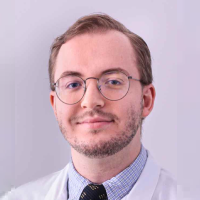
Prof. Amin Beheshti
Macquarie University
Read More
Professor Amin Beheshti is a Full Professor of Data Science at Macquarie University and Adjunct Professor of Computer Science at UNSW Sydney. He is the founder and director of the Centre for Applied Artificial Intelligence and head of the Data Science Lab at Macquarie, leading major initiatives in applied AI, data analytics, and innovation.
With over $45 million in competitive research funding and more than 60 projects, Prof. Beheshti is a recognised leader in translating AI research into real-world impact. His numerous honours include the Australian National AI Award (AI Academic/Researcher of the Year), multiple Macquarie Excellence Awards, and the National Security Impact Award.
He has authored several influential books on data and process analytics and serves regularly as a keynote speaker and chair at international conferences. His vision is to move AI from theoretical promise to practical, purposeful application—transforming industries and society through intelligent, human-centred innovation.
Switzerland
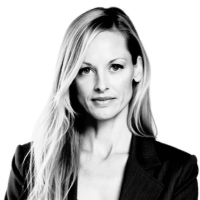
Dr. Victor Staartjes
University of Zurich
Read More
Dr Victor Staartjes is a neurosurgery trainee and machine-intelligence innovator who leads the Machine Intelligence in Clinical Neuroscience (MICN) Laboratory at the University Hospital Zurich. Wiith more than 170 peer-reviewed publications and 1 textbook, his expertise spans AI-driven clinical prediction modelling, intra-operative machine vision, synthetic imaging and microsurgical neuro-anatomy.
United States
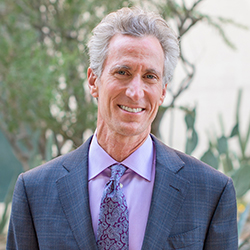
Aimee DeGaetano
CEO, New York
Read More
Aimee DeGaetano RD MPH (Dr cand.) is a global leader in medical affairs and strategy within neurovascular and med-tech domains. She specialises in real-world evidence and the clinical translation of AI-enabled devices, drawing on a unique background that bridges public-health epidemiology, clinical trials and neuromodulation. Her expertise supports the efficient development and regulatory advancement of breakthrough therapies and diagnostic technologies.
United States
Michael T. Lawton, MD
President & CEO, Barrow Neurological Institute
Read More
Dr Michael T. Lawton is President and CEO of the Barrow Neurological Institute and Chair of the Department of Neurosurgery in Phoenix, Arizona. An internationally recognised leader in cerebrovascular and skull base neurosurgery, his clinical and research expertise spans complex aneurysms, arteriovenous malformations, cavernous malformations, and stroke. Beyond microsurgical excellence, Dr Lawton has made seminal contributions to the application of connectomics in cerebrovascular diseases. He is also actively involved in brain–computer interface research and applications, including collaborations with Neuralink, at the forefront of translating neural interface technologies into clinical neuroscience. His work continues to shape the future of precision, network-based, and computational approaches to neurosurgery.
Switzerland
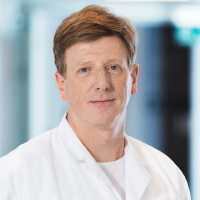
Prof. Luca Regli
University Hospital Zurich
Read More
Professor Luca Regli is a globally recognised neurosurgeon, currently Chair of the Department of Neurosurgery at the University Hospital Zurich. His clinical and research expertise spans cerebrovascular disease, complex intracranial lesions, cerebral revascularisation, stroke mechanisms and intra-operative imaging. With more than 250 peer-reviewed publications and over 13,000 citations, he contributes substantially to neurosurgical science and practice. Professor Regli brings deep insight into microsurgical technique, vascular neurosurgery and the translation of advanced neuro-imaging into high-precision neurosurgical care.